Books, objects and posters
Find in the online shop a selection of products related to the author
See full shop
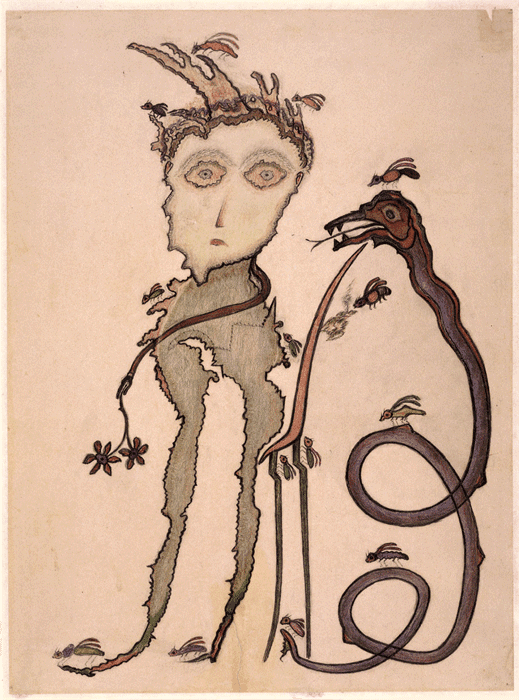
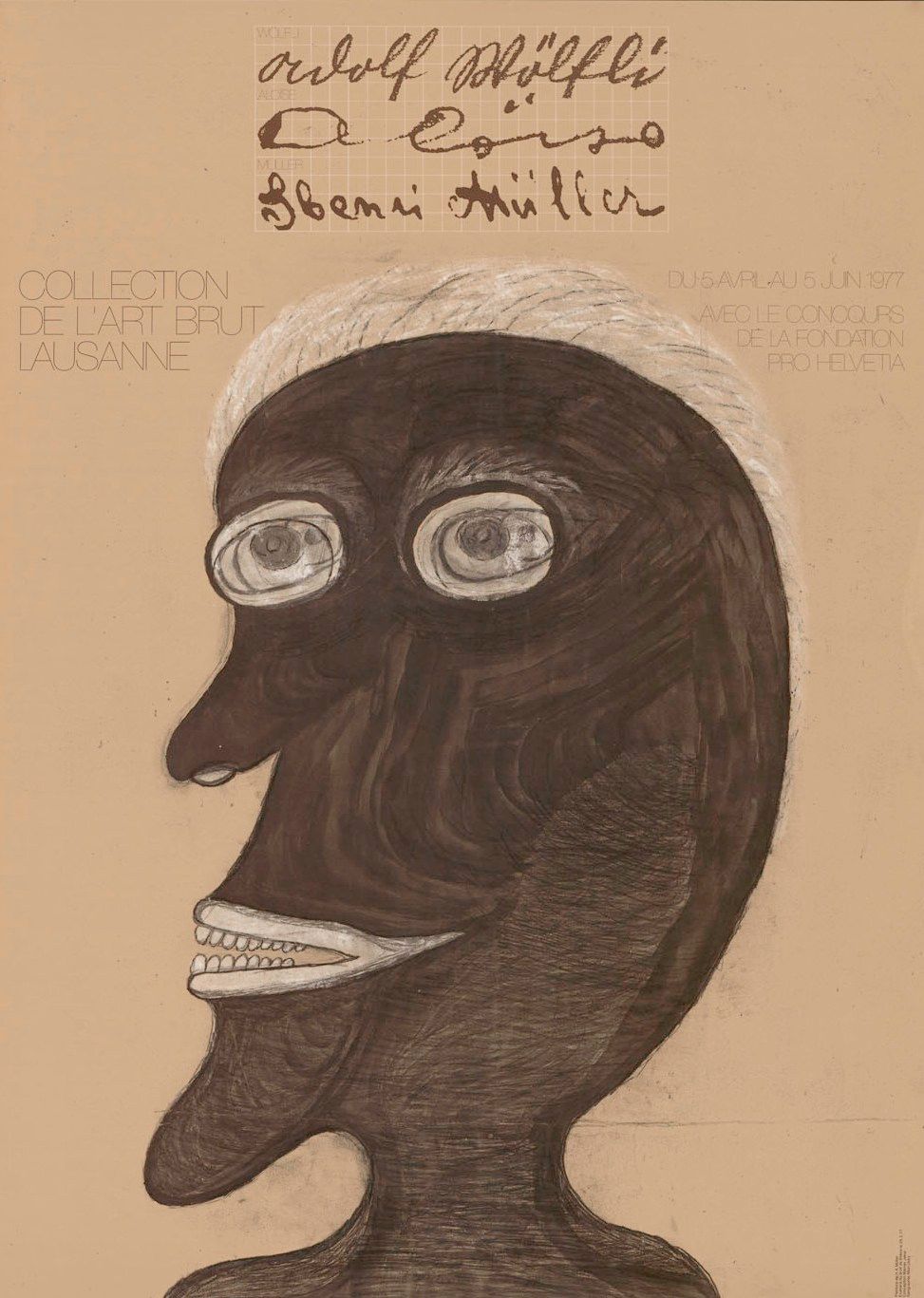
Heinrich Anton Müller was born in Versailles (France). He married a Swiss girl and settled in her country, in Corsier-sur-Vevey (canton of Vaud). He became a winegrower and, with the ingenuity of a true handyman, invented a "machine for pruning vines prior to grafting." Unfortunately, he forgot to pay the annual patent tax to the Federal Copyright Office where the invention was registered, enabling others to exploit his discovery. Thereupon he fell into depression. His behavior worsened and, at the age of 37, he was committed to the psychiatric clinic of Münsingen, near Bern, where he would remain for the rest of his days. Here, in 1914, he began creating artistic pieces, first in the form of assemblages and, three years later, in the form of drawings.
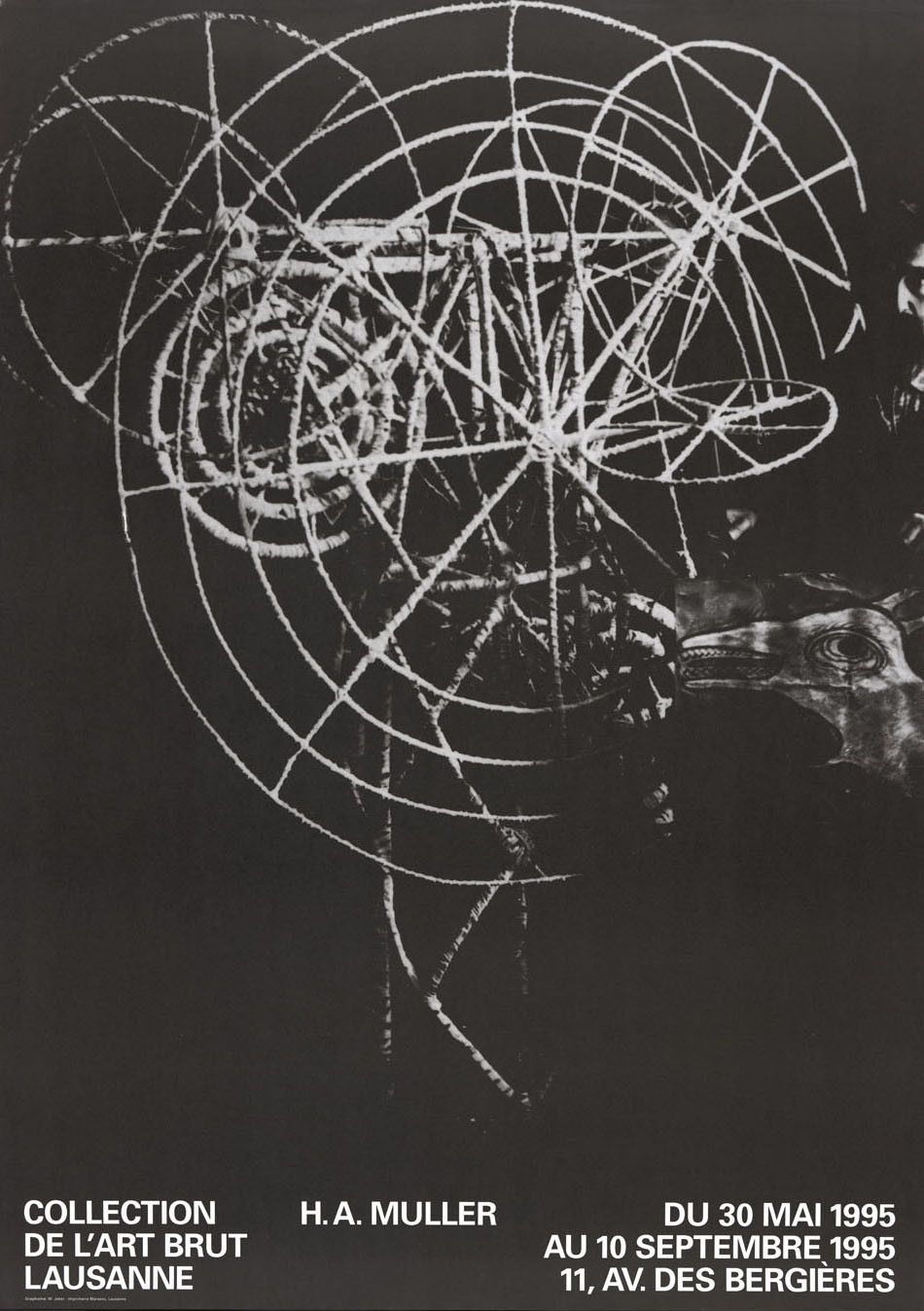
Heinrich Anton Müller was skilled at creating impressive mechanical devices out of branches, rags and wire—lubricating the parts with his own excrements—and large variously-dimensioned cogs that drive each other. Today, only a few photos remain to attest to the extraordinary inventions that he himself ended up destroying.
He also enjoyed making drawings, first on the hospital walls and subsequently on pieces of cardboard or sheets of Kraft paper that he stitched together. Using mainly lead pencil and white chalk, he depicted an imaginary bestiary. Writing, too, was important to him, leading him to draw up unusual texts in fancy handwriting set down on both sides of his graphic compositions, so that their content underscores the overall mysterious nature of his production.
10 items available
Find in the online shop a selection of products related to the author
See full shop
Brut writings speak out, boxed set with two CDs and a booklet illustrated, Collection de l’Art Brut, in collaboration with the radio station Espace 2, Swiss broadcasting company Radio Télévision Suisse, 2012.
More
Almanach de l’Art Brut, Jean Dubuffet et al.Fac-similé [maquette originale de 1948] Edition établie et présentée sous la direction de Sarah Lombardi et Baptiste Brun, en collaboration avec Vincent Monod, Lausanne/Milan, Collection de l’Art Brut/SIK-ISEA/ 5 Continents Editions, 792 pages, 2016, 21 x 28, 387 illustrations en couleur et n/b relié. ISBN est 978-88-7439-737-2
More
Swiss Made, l’Art Brut en Suisse, sous la direction de Sarah Lombardi, Collection de l’Art Brut (Lausanne), 2018, disponible en Français, allemand, anglais et italien.
Swiss Made, l’Art Brut en Suisse, sous la direction de Sarah Lombardi, Collection del’Art Brut (Lausanne), 2018, disponible enFrançais, allemand, anglais et italien.
Swiss Made, l’Art Brut en Suisse, sous la direction de Sarah Lombardi, Collection de l’Art Brut (Lausanne), 2018, disponible en Français, allemand, anglais et italien.
Swiss Made, l’Art Brut en Suisse, sous la direction de Sarah Lombardi, Collection de l’Art Brut (Lausanne), 2018, disponible en Français, allemand, anglais et italien.
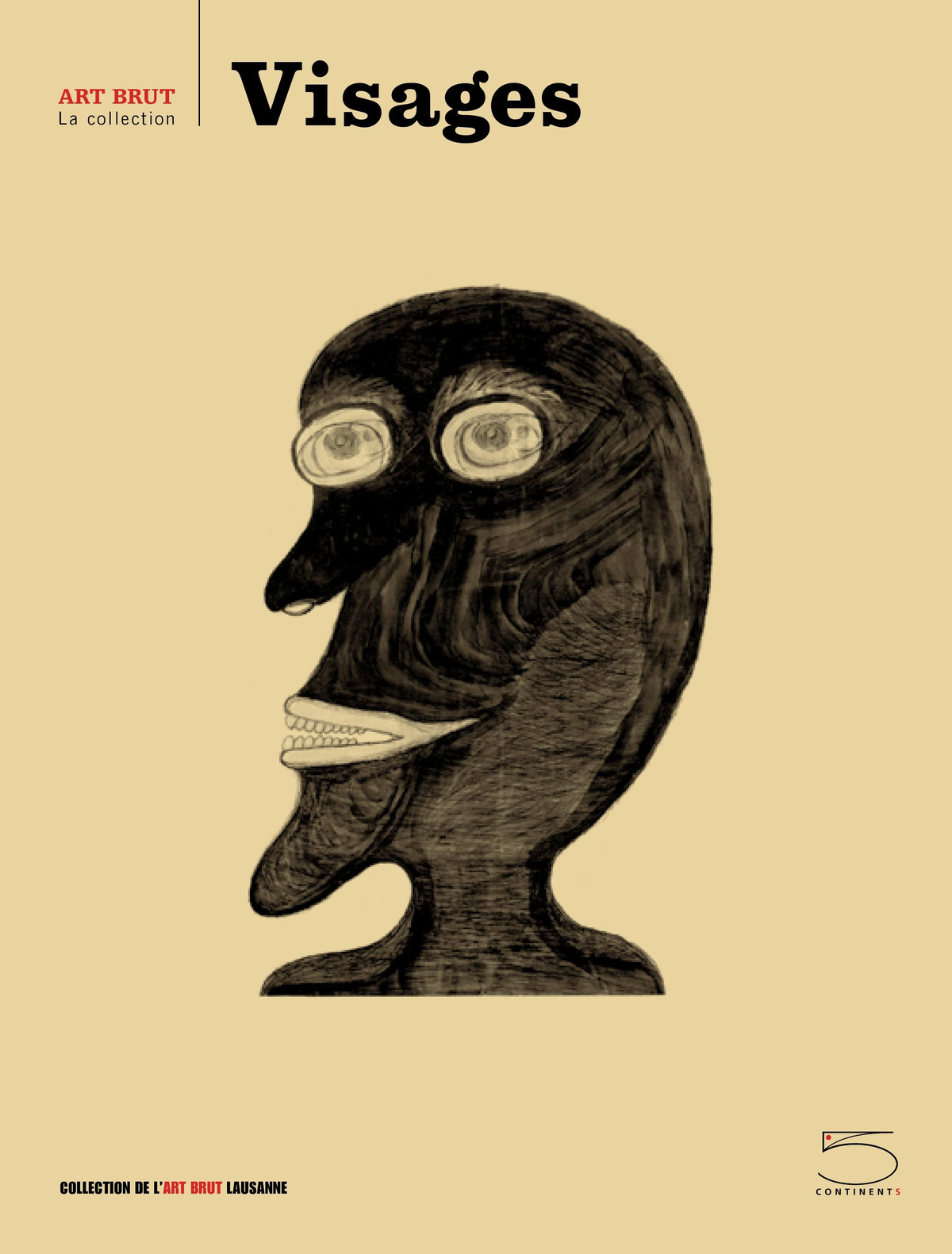
Marc Décimo, Sarah Lombardi and Pascal Roman, Faces, Lausanne/Milan, Collection de l’Art Brut/5 Continents Editions, 2023, « Art Brut, la collection », under the direction of Sarah Lombardi, 153 pages, over 100 color plates, available in French or English.
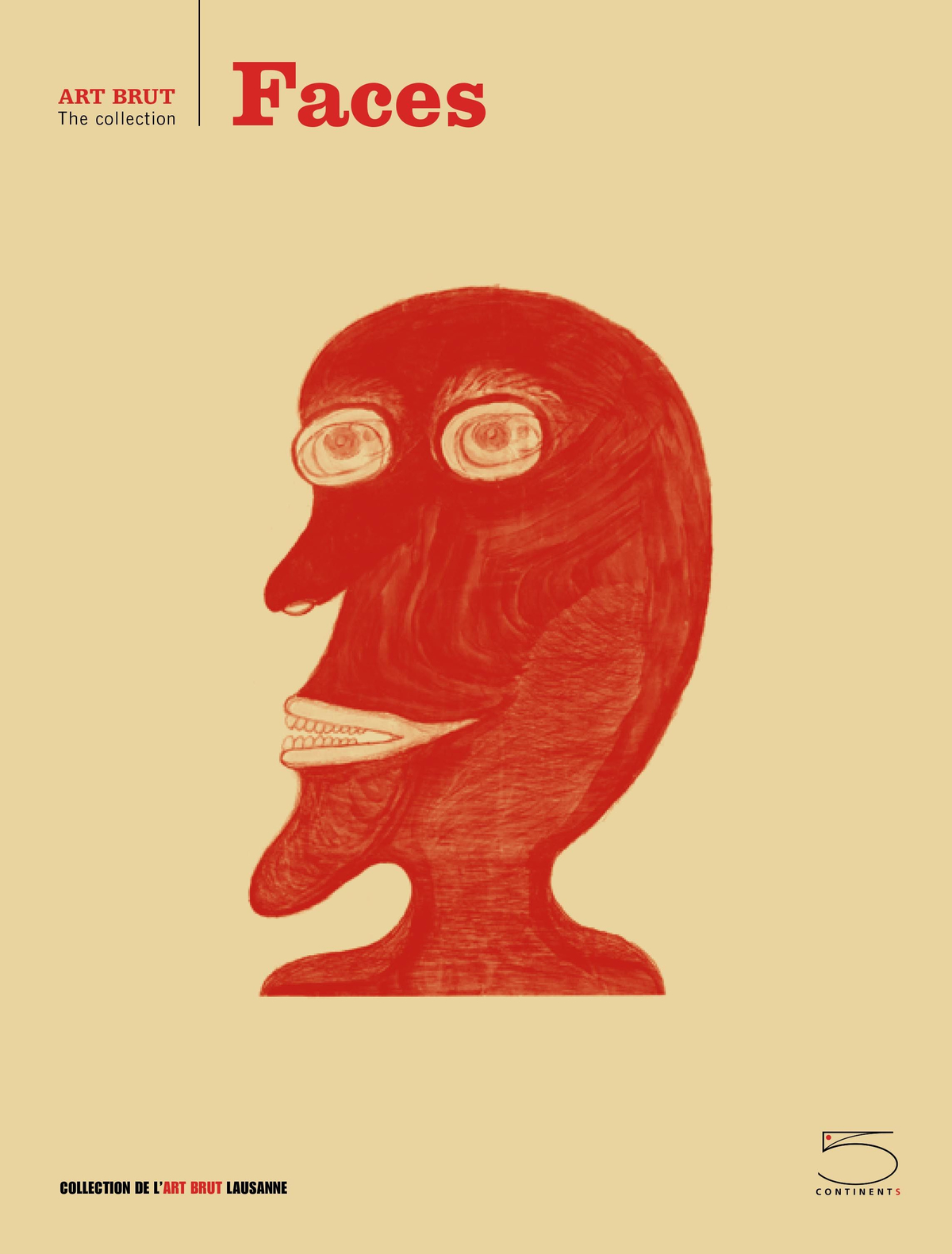
Marc Décimo, Sarah Lombardi and Pascal Roman, Faces,Lausanne/Milan, Collection de l’Art Brut/5 Continents Editions, 2023, « Art Brut, la collection », under the direction of Sarah Lombardi, 153 pages, over 100 color plates, available in French or English.
Related to the author
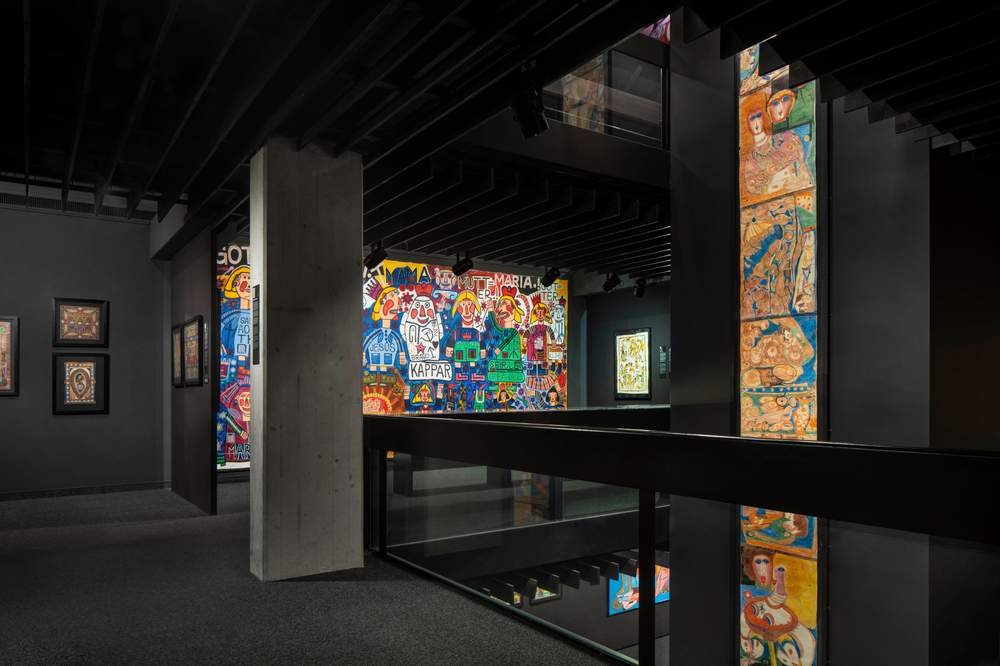
The museum constantly displays part of its collection, including works by major creators such as Aloïse Corbaz, Augustin Lesage, Marguerite Sirvins, and Auguste Walla. The Art Brut pieces are created by self-taught artists—solitary individuals living on the margins of society, patients of psychiatric hospitals—who produce work apart from tradition and artistic trends, without concern for public criticism or the gaze of others.
Every day from 10 am to 8 pm (except Tuesday)
Buy your ticket